
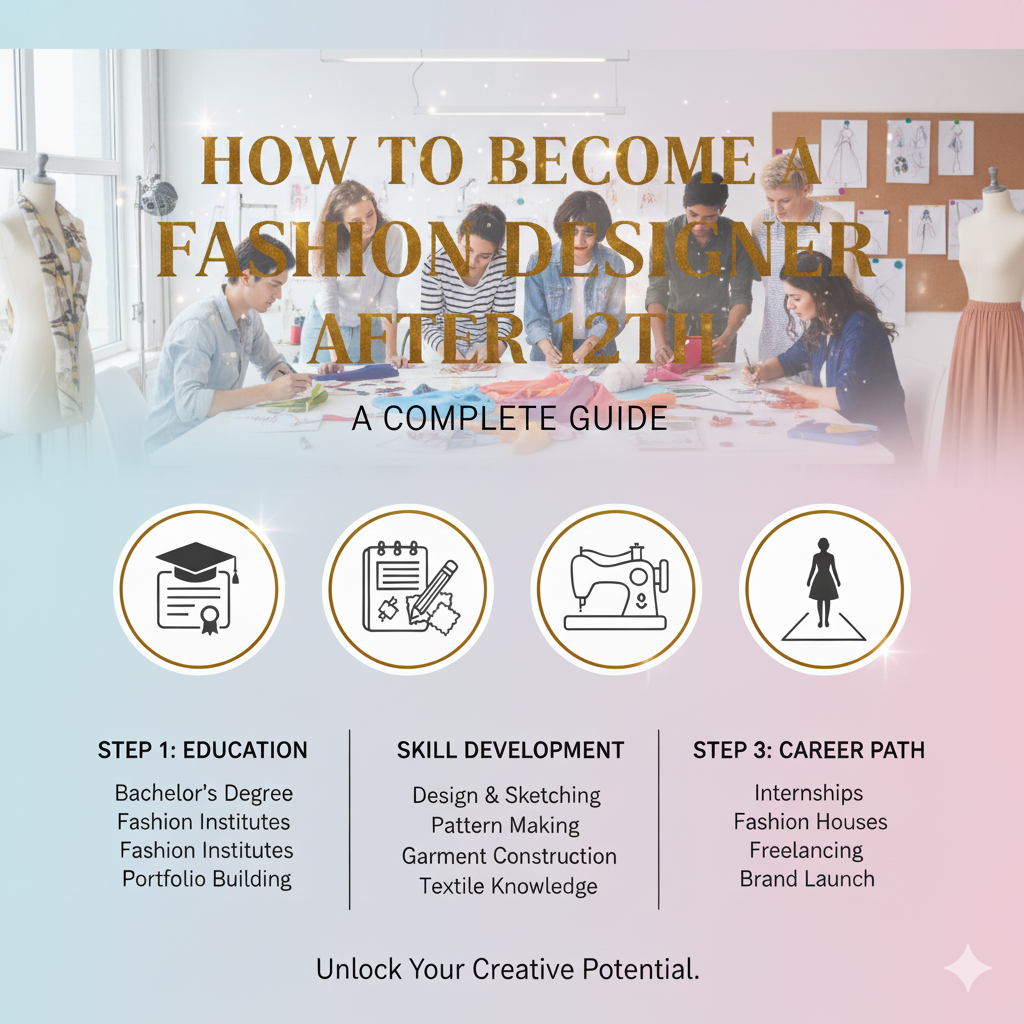
How to Become a Fashion Designer After 12th
Fashion design is an exciting field with creativity, artistry, and technical skills, culminating in clothing and accessories that shape trends and change style. If you have always had an eye for fashion and want to officially follow a career that involves your passion, you might be thinking about how to start as a fashion designer after 12th grade. Fortunately, there are plenty of ways you can break into the industry – and you do not necessarily have to come from a typical educational background in design to do so.
In this blog, we will show you how to pursue a career in fashion design after the 12th grade, from the right education qualifications, skill development, and, of course, fashion design career paths afterward!
Step 1: Understand the Role of a Fashion Designer
Before embarking on the journey, it’s important to understand what being a fashion designer means. Fashion designers create clothing, accessories, footwear, and fabrics. Their work crosses into different areas, including:
-
- Designing: The process of creating new clothing or accessories with consideration to current trends, aesthetics, and functionality.
-
- Technical skills: Knowledge of patterns, types of fabric, sewing techniques, and construction of garments.
-
- Trend forecasting: Understanding what will be fashionable and what styles and designs will come to the market.
-
- Branding and marketing: Creating a solid personal brand and marketing your designs to consumers and retailers.
Step 2: Pursue the Right Education
How to Become a Fashion Designer After 12th
After the 12th grade, the best way to start working toward your career as a fashion designer is to begin your specialized education in fashion. Although you do not necessarily have to attend a design school right after school, it is crucial to build on skills and knowledge. Educational paths you will want to consider are the following:
1. Undergraduate Degree in Fashion Design
A degree in fashion design is the most thorough and straightforward path. Some favorable options you can pursue include:
-
- Bachelor of Design (B.Des) in Fashion Design
-
- Bachelor of Fashion Technology (B.FTech)
-
- Bachelor of Fashion Design (B.FD)
These courses typically range from 3-4 years and include subjects such as design fundamentals, textiles, pattern making, garment construction, fashion illustration, CAD, etc.
2. Diploma or Certifications in Fashion Design
If you are not ready to commit to the full undergraduate degree and prefer to start with a shorter, more focused experience, diploma or certifications in fashion design still provide you with solid training in design. Typically ranging from 6 months to 2 years, the short courses allow you to focus on certain elements of fashion design, such as styling, fashion marketing, and fashion illustration.
3. Other Fashion-Related Programs
If you have a degree in some area other than fashion but are interested in studying fashion, you can also consider enrolling in a post-graduate diploma program or a specialized certificate course lasting 4-6 weeks.
Step 3: Choose the Right Institution
India boasts some of the finest fashion design institutes where you can sharpen your skills. A few prominent fashion schools in India are:
-
- . National Institute of Fashion Technology (NIFT): This is one of the premier fashion institutes for fashion education, with programs for undergraduate, postgraduate, and diploma.
-
- . Pearl Academy: A recognized institute offering extensive courses in design, fashion, and business.
-
- . International Institute of Fashion Design (INIFD): Various courses at both undergraduate and diploma level can be pursued here.
-
- . MIT Institute of Design: This institute offers design programs based on creative for social and cultural innovation and impact.
When selecting a college or an Institute, do see the courses that are offered, the faculty, infrastructure, and affiliations to the industry. Many reputed design schools also provide internships opportunities where you get experience in an industry and can also build your portfolio
Step 4: Develop Your Skills.
Fashion design is an avenue for great creativity, but you’ll need some technical skills as well. Below are some key skills you will need to develop:
1. Creativity and Artistic Vision
Fashion design is alike being able to identify with personal style and creativity. This requires the capacity to think creatively and have unique designs
2. Technical Knowledge
Fashion design really is a technical ability base. How to become a fashion desiner after 12th Garment construction, pattern making, fabrics, sewing, are all one area of knowledge. 2D design software like CAD (computer aided design) is another technical side to the discipline, but can be learned over the course of your studies.
3. Attention to detail
Fashion designers must have an eye for the small details, whether it is stitched detail in a garment or a fabric texture. Attention to detail is learned through practice and observing the skilled practice of designers.
4. Trend Knowledge
Fashion is an industry that it continuously changing and evolving. Designers are required to keeping the newest trends in abreast or will have to project what the next trend will be. Having a sense of the market, keeping up with fashion events globally and knowing the cultural aspects that drive the fashion process will keep you trend-savvy.
5. Communication and Presentation Skills
Designers must present their ideas to clients, manufacturers, and the public. The ability to communicate effectively is paramount in bringing your designs to fruition and garnering intere di msi lead on supporting your project
Step 5: Build Your Portfolio
How to Become a Fashion Designer After 12th
The five steps to a career in fashion will conclude with building your portfolio.
A portfolio is an essential tool for any fashion designer and the key to showcasing your potential. It provides the most comprehensive look at your creativity and skill level. Your portfolio can have many iterations. Here are some ways you can build a portfolio:
-
- Design a collection of your own (it can be just a few pieces, every touch point matters).
-
- Use mood boards, sketches, fabric swatches.
-
- Document the design process from conception to the end product.
-
- Participate in fashion shows, competitions, or exhibitions to get your designs observed.
Step 6: Obtain Hands-On Experience
How to Become a Fashion Designer After 12th
Fashion is a hands-on business, so it is important to get hands-on experience. Here are a few ways to begin.
-
- Internships: Most fashion design programs arrange internships for their students with recognized designers, brands, or fashion houses. This is a great chance to learn the business, network and obtain hands-on experience.
-
- Freelancing: If you consider yourself skilled, you could begin marketing yourself as a freelance designer. This can be small work with friends, family, or local boutiques.
-
- Fashion Shows and Competitions: Get involved in school fashion design competitions or get noticed at fashion shows. Win or not, being a part of the show will give you even more visibility.
Step 7: Launch Your Fashion Career
Once you have your academic credential and have gathered up a few projects in your portfolio, you can begin considering your options for job placements or perhaps start your own fashion line. You could consider various options for job placements such as:
-
- Fashion Designer: work with apparel companies and manufacturers, or establish your own label.
-
- Fashion Stylist: facilitate client wardrobe selections to prepare for events.
-
- Fashion Illustrator: use your art skills to create three-dimensional representations of design ideas.
-
- Fashion Consultant: advise brands or individuals on trends, clothing and styling.
-
- Fashion Merchandiser: work on the marketing and distribution end of the industry dealing
Conclusion
Becoming a fashion designer after completing 12th grade demands determination, creativity, and a good education. With training and skills, you can transform your love of fashion into a career. Whether you choose to attend a prestigious school, gain experience through internships, or start your brand, the fashion industry has endless opportunities for innovative thinkers.
So, if you have a sense of style, creativity, and a passion for creating your own work, begin your journey now. The fashion world is waiting for you!