
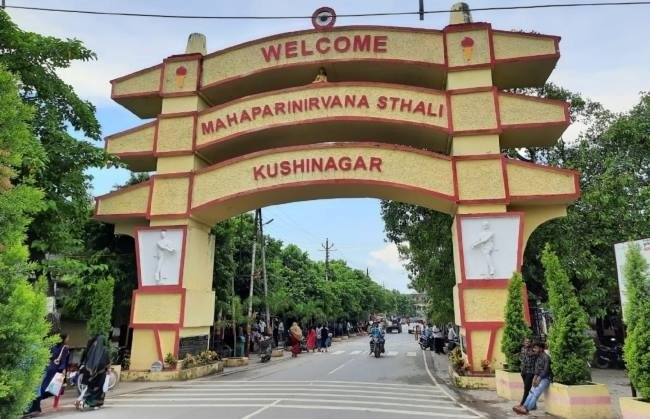
Kushinagar, a peaceful town in Uttar Pradesh, India, is one of the most revered pilgrimage destinations for Buddhists across the world. Known for its profound spiritual history, Kushinagar is the sacred place where Gautam Buddha attained Mahaparinirvana, the final liberation from the cycle of life, suffering, and rebirth. For millions of followers, this town symbolizes peace, enlightenment, and the timeless teachings of the Buddha.
This 1500-word SEO blog explores the history, significance, main attractions, international connections, travel information, and spiritual essence of Kushinagar—making it the perfect guide for spiritual travelers, history lovers, and Buddhists visiting India.
Introduction to Kushinagar: Land of Enlightenment and Peace
Kushinagar, also known as Kushinara in ancient texts, is one of the four major Buddhist pilgrimage sites, along with Lumbini (birthplace), Bodh Gaya (enlightenment), and Sarnath (first sermon). While each of these places holds immense significance, Kushinagar stands apart as the location where the Buddha delivered his final teachings and peacefully attained Mahaparinirvana under the shade of Sala trees.
The town’s calm environment, sacred monuments, ancient stupas, and global Buddhist monasteries make it a destination where history, faith, and archaeology blend seamlessly.
The History of Kushinagar – A Journey Along the Path of Gautama Buddha
Ancient Kushinara – The Final Journey
Ancient Kushinagar, also known as Kushinara, was part of the Malla Kingdom, and both the Mahaparinibbana Sutta and the Anguttara Nikaya mentioned it as the place where the Buddha passed away. The journey of the Buddha from Pava (now Fazilnagar) to Kushinara, where he died, marked the end point of his travels throughout India.
Although he had become weak and ill, he continued to lead his followers and deliver his last Dhamma.
About 483 B.C.E, after 45 years of teaching and leading people on the path to enlightenment, the Buddha decided it was time to rest and enter into Mahaparinirvana. It was this choice that demonstrated how important the city of Kushinagar was to the Buddha when he was alive.
The discovery and excavation of Kushinagar began in the late 1800s after the area had been lost for many centuries due to overgrown trees and heavy vegetation. British archaeologists such as Sir Alexander Cunningham made the discovery.
Discovery and Excavation
numerous stupas, monasteries, and the famous reclining Buddha statue that verified Kushinagar’s association with the Buddha during the last days of his life.
Whatever the reason, Kushinagar is recognized as a UNESCO World Heritage Site and as an important historic site for the Buddha.
The spiritual significance of Kushinagar
Kushinagar is manifested i n three critical principles of Buddhist philosophy:
#1. Change affects everything (Anicca), such that the Buddha’s death is representative of this impermanence, as it pushes his followers to develop a greater level of freedom through mindfulness and detachment.
#2. Compassion is reflected in the Buddha’s last words. Therefore, his last messages to his followers urged them to show kindness and love to all creatures.
#3. Liberation (Nirvana) is the ultimate goal for all Buddhists, and Kushinagar represents this state of being free from suffering.
Top Places to Visit in Kushinagar
Kushinagar attracts many visitors who seek inner peace and knowledge through meditation and learning about the Dhamma. There are many sites in Kushinagar, both of spiritual and archaeological significance that attract travelers. Below is a list of the most important sites to see while visiting Kushinagar.
#1.Mahaparinirvana Temple: The Center of Kushinagar
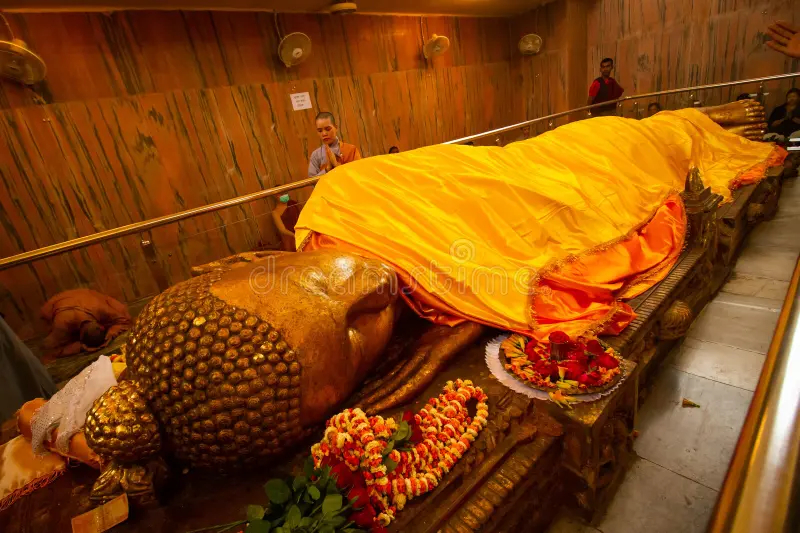
The Mahaparinirvana Temple is a well-known attraction for many and brings millions of visitors each year. The main feature of this temple is the 6.1-metre-long reclining statue of Gautam Buddha sitting peacefully inside.
The Buddha has a calm expression and is lying on his right side and facing westerly.
Mahaparinirvana Temple Special Significance:
- Represents the time of Gautam Buddha’s Death
- One of the most recognizable Buddhist Statues in the World
- A Perfect Place to Meditate and Reflect Spiritually
The Temple area also has a beautiful garden with Ancient Stone Columns containing Inscriptions that illustrates an account of the earlier Times associated with Buddhism.
#2.Rañabahr Stupa – The site of the Buddha’s cremation
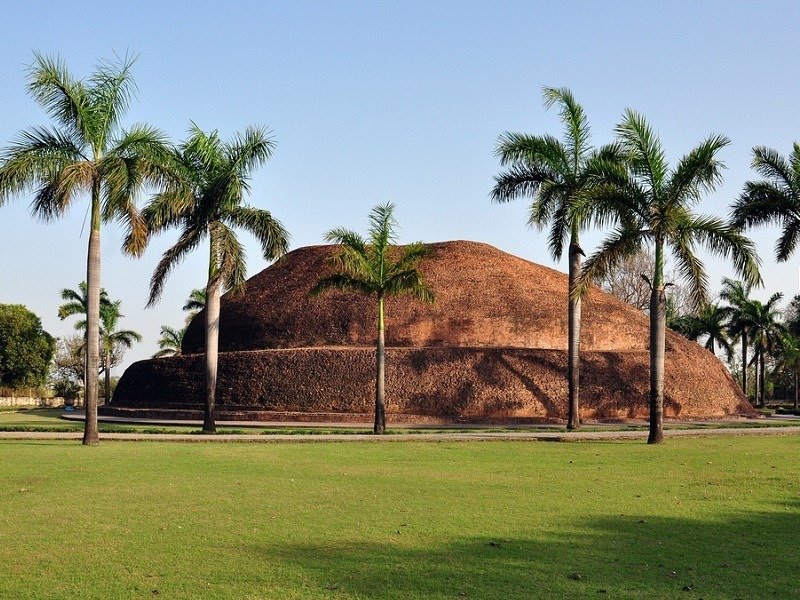
About 1 / 2 kilometer from the temple is the Rañabahr Stupa. It is here that the earthly remains of the Buddha were cremated. The large brick stupa is surrounded by beautiful forests, making it a very spiritual place to reflect and meditate.
Highlights
- Believed to be at least 2,500 years old.
- Surrounded by a peaceful natural environment.
- A destination for pilgrims who come to pray and meditate.
The stupa symbolizes the Buddha’s earthly journey, it reminds the visitor of how fleeting life is.
#3.Matha Kuar Shrine
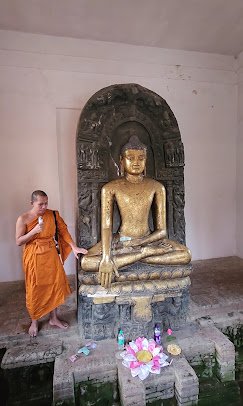
The Matha Kuar Shrine is home to a beautiful statue of the Buddha carved from a solid piece of stone. It shows the Buddha delivering his final sermon before reaching the goal of Mahaparinirvana.
The name “Matha Kuar” comes from the local language, meaning “one with a sweet face,” and refers to the peaceful expression portrayed on the statue of the Buddha.
#4. Buddhist Temples and Monasteries from Countries Around the World.
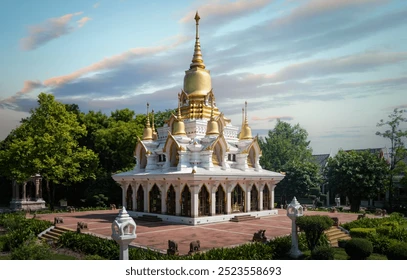
Kushinagar serves as a hub for Buddhism on a global scale, with countries creating monasteries to promote a connection to the spiritual leader through their particular style of architecture. A few examples of these buildings are:
- Buddhist Centre in Japan
- Thai Temple
- Pagoda from Burma (Myanmar)
- Chinese Monastery and Temple
- Sri Lankan Peace Pagoda
- Korean Temple
- Vietnamese Monastery
The international nature of the Buddhist monasteries shows the growth of Buddhism throughout Asia and allows visitors to see multiple cultural traditions.
#5. Buddha Museum
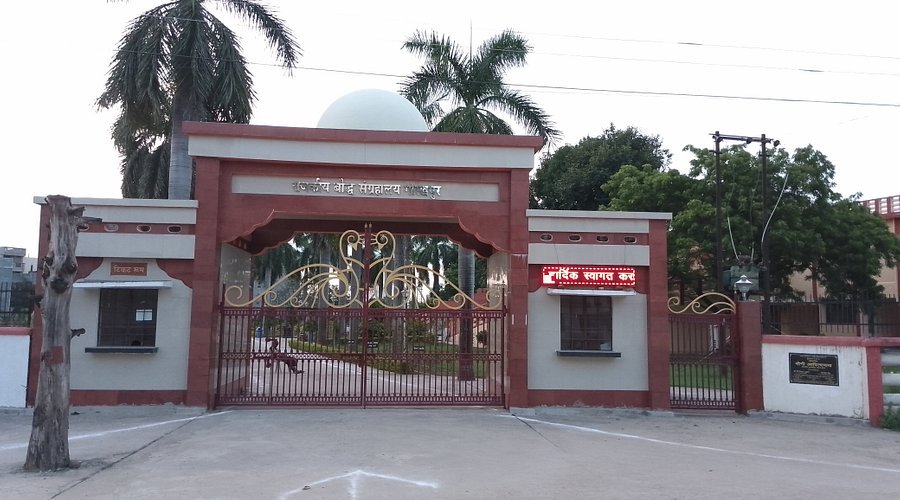
The Buddha Museum contains artifacts, coins, statues, and excavated relics that represent the Mauryan (323 B.C.-185 B.C.), Gupta (320 B.C.-550 B.C.), and Kushan (50 B.C.-370 B.C.) periods. This exhibition is well-suited for those who enjoy studying history and archaeology to learn about the early history of Kushinagar.
Kushinagar’s 21 st Century Future
Since 2001, Kushinagar has increasingly been on a global scale and is now home to World-Class Facilities for Buddhist Pilgrims and Tourists.
Kushinagar International Airport

As of 2021, Kushinagar International Airport allows direct access to:
- Sri Lanka
- Japan
- Thailand
- Bhutan
- Vietnam
- Myanmar
- Nepal
Kushinagar is now a focal point for Buddhists who travel to the area.
Buddhist Festivals
Throughout the Year Buddhist Festivals bring people together from all over the world:
- Buddha Purnima
- Mahaparinirvana Day
- Dhamma Teachings and Retreats
Monks, Scholars, Spiritual Seekers all gather together.
What Makes Kushinagar Important to Today’s Travellers
Kushinagar is a great destination to find Inner Peace, which is something many people in this busy world want and can find in Kushinagar. The forests, Stupas, chanting monks, and Monasteries are a perfect environment to get away from Life’s Chaos and get back to themselves.
1. A Place for Meditation
Many Monasteries offer Guided Meditations for those wishing to achieve Mental Clarity and Inner Peace.
2. A Place for History and Culture
Ruins from the Gupta Period, Ancient Inscriptions and Monuments and Excavated Areas, make Kushinagar a Paradise for the Archaeological and Historical Enthusiast.
3. A Place to Gain Insight about Buddhism
Many Buddhist Pilgrims consider Kushinagar to be one of the Holiest Places, however, many things that Buddha taught in Kushinagar inspire people from all walks of life.
Visiting and travelling to Kushinagar
- Air: By using the Kushinagar International Airport.
- Train: The nearest significant station is Gorakhpur, located approximately 50km away from Kushinagar.
- Road: There is good road access via National Highway 28.
Best Time To Go To Kushinagar
The best months for visiting and enjoying Kushinagar is from October to March due to pleasant weather for sightseeing and temple visits.
Where To Stay In Kushinagar
Kushinagar provides all types of accommodation options, including:
- Budget hotels
- Meditation centres
- International guesthouses
- Temple guesthouses
Buddha’s Teachings Found In Kushinagar
When visiting Kushinagar, many visitors comment that Kushinagar is one of those locations where silence speaks. The experience of being in this environment encourages people to adopt the practices of Buddhism:
1. Mindful: Live in the moment and do not attach to anything.
2. Compassion: Show love and kindness to all living beings.
3. Simplicity: Live with less in order to gain clarity through peacefulness.
4. Wisdom: The ability to see through illusions and egos.
Kushinagar is a walking, living memory of Buddha’s teachings.
Summary: Kushinagar—the Eternal Destination of Buddha’s Journey
Kushinagar has been a spiritual haven for centuries, a place of peace, wisdom, and awakening. It is the place of Gautama Buddha’s final enlightenment, but its beauty continues to captivate and inspire millions around the world.
Whether you are an individual searching for spirituality, a Buddhist pilgrim, an interested traveller, or simply in search of inner peace, no matter your reason for going to Kushinagar, you will always find a unique and memorable experience. The ancient stupas, tranquil monasteries, international temples, and peaceful surroundings create a setting conducive to stillness and lightness of mind.
A trip to Kushinagar is a trip back in time and into the heart of spirituality.
https://javed.blinkcode.in/gautam-buddha-and-kushinagar-the-sacred-land-of-mahaparinirvana/